
How it works
There is no server in the middle
Most weather apps are a thin client for someone's rendering service: their server reads the radar, draws a picture, and sends you the picture. HookEcho downloads the radar itself and draws it on your machine. That one difference explains almost everything else about it.
Where the data comes from
All of it is public and all of it is free, because the American taxpayer already paid for it. The app reads:
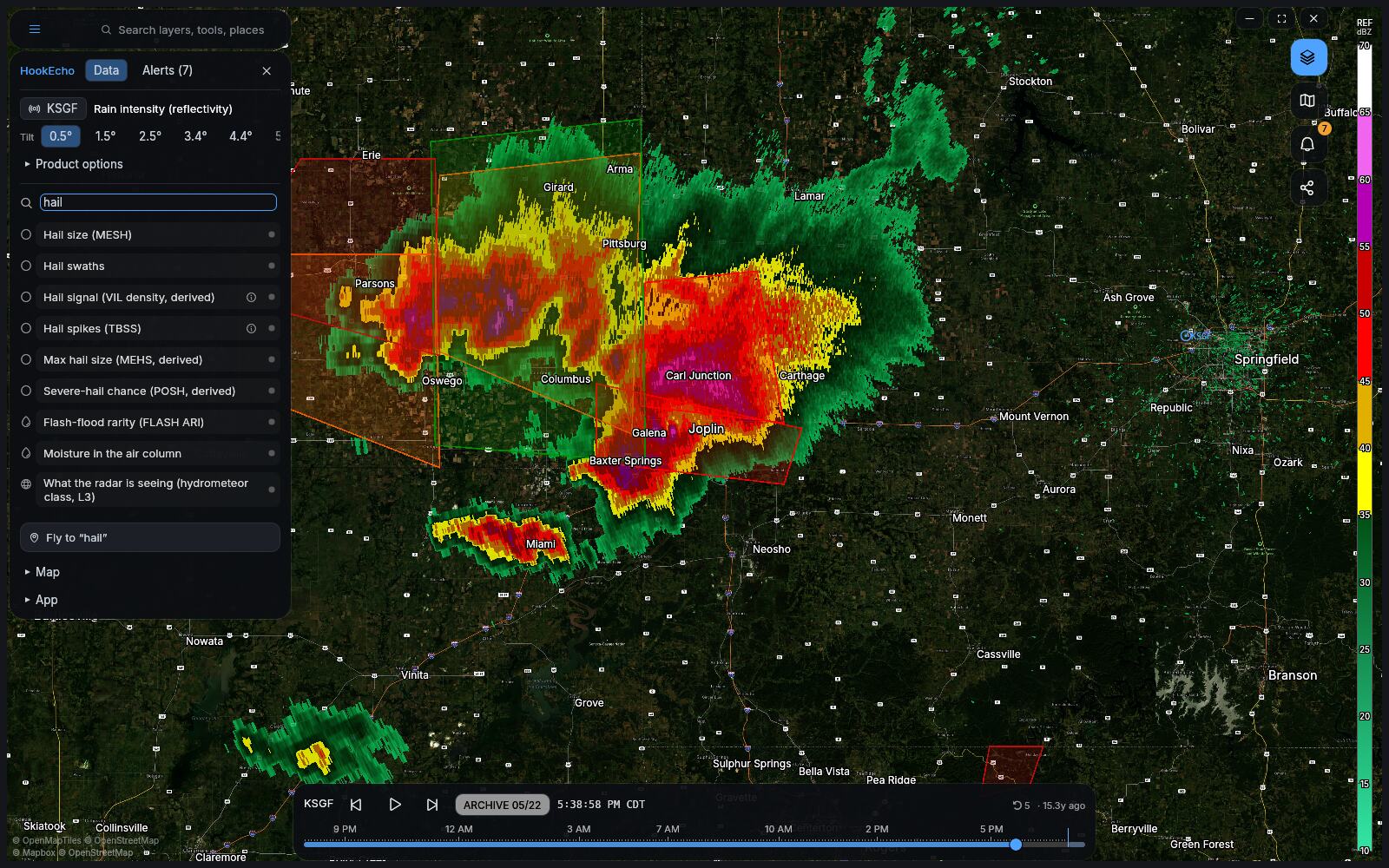
- NEXRAD Level 2 — the full volume scan from a WSR-88D: every elevation angle, reflectivity, velocity, spectrum width and the dual-polarization fields. Live from the real-time feed, and archived back to 1991.
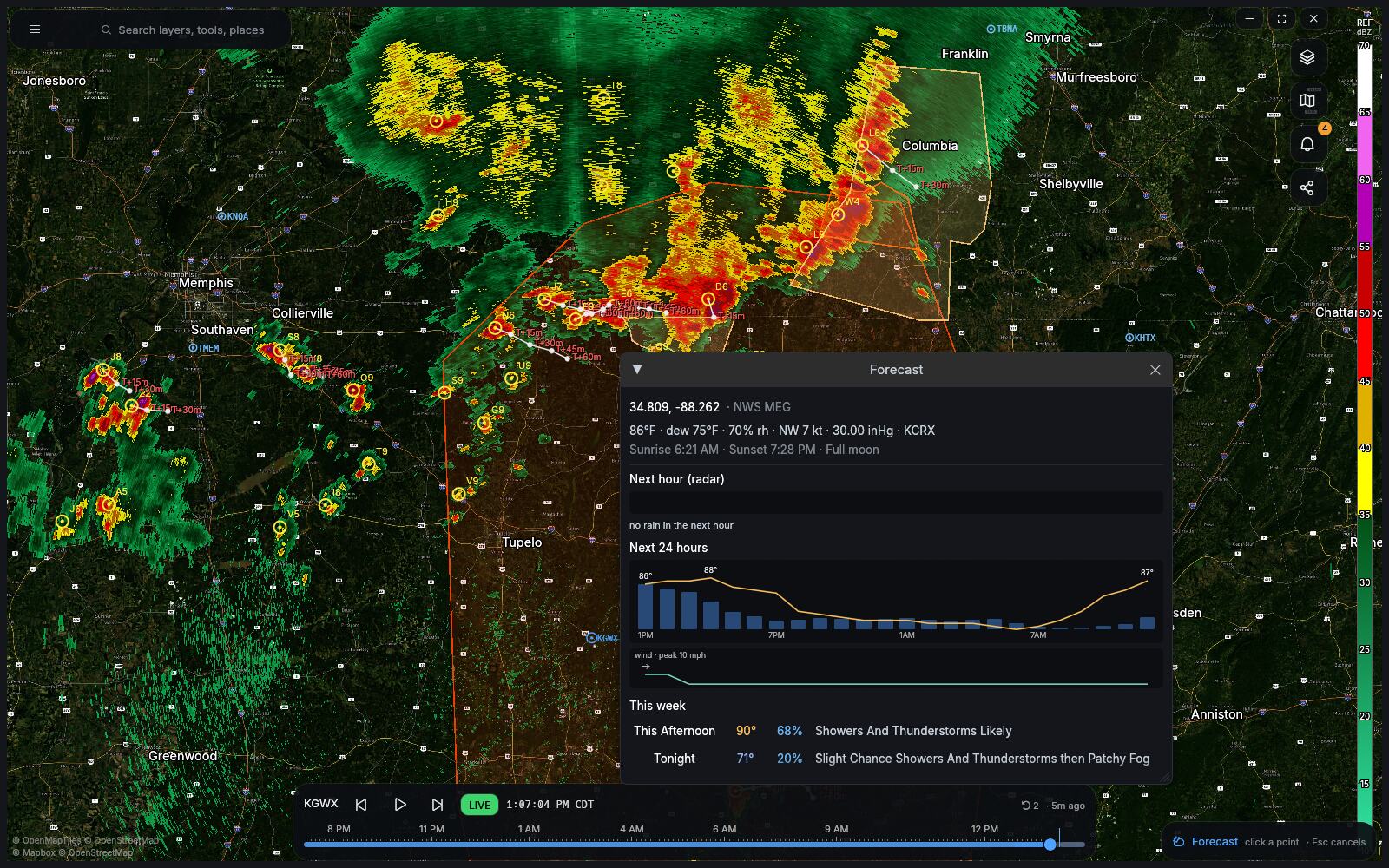
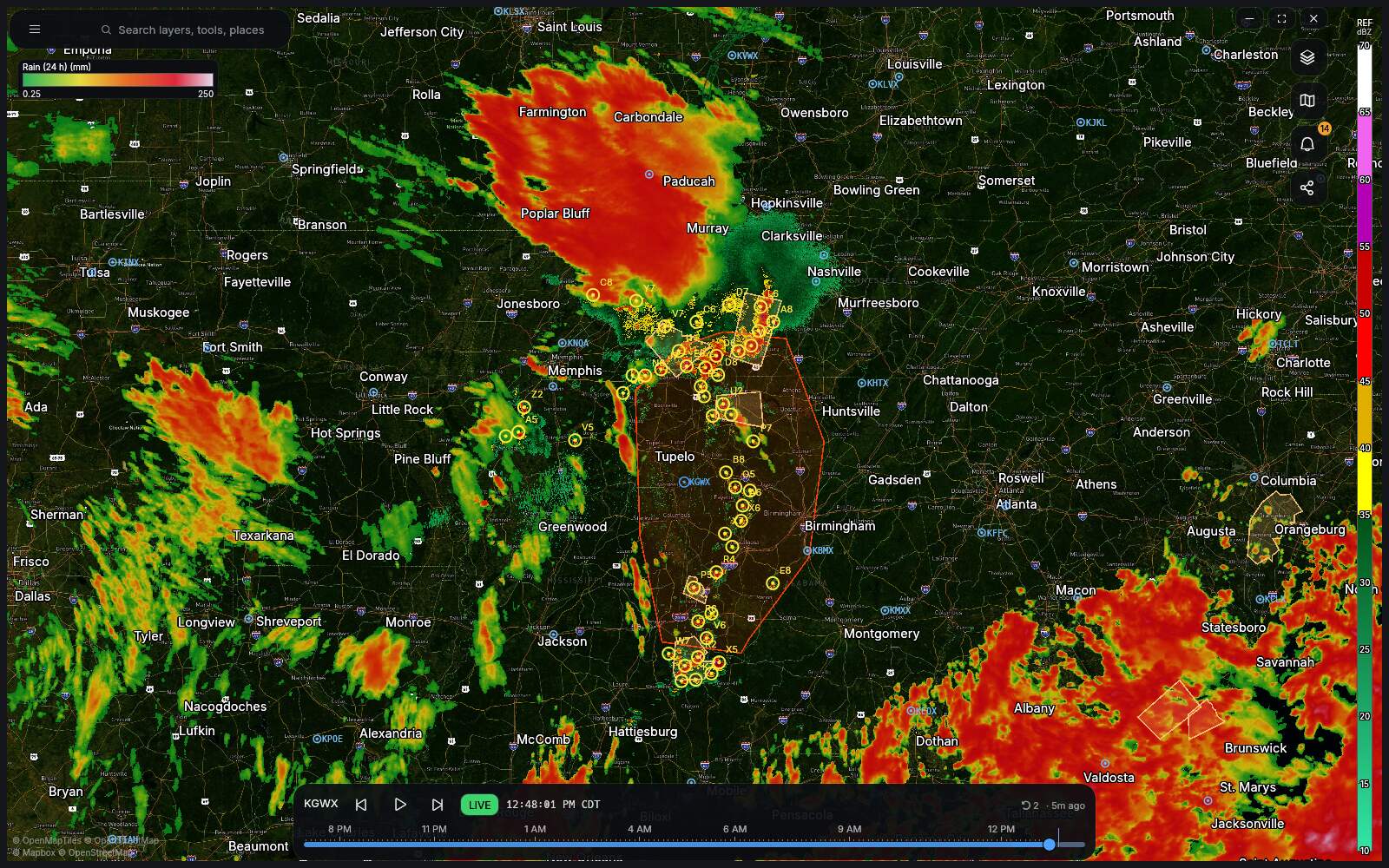
- NEXRAD Level 3 — the algorithm products the radar itself computes: storm tracks, hail, mesocyclone detections, precipitation totals.
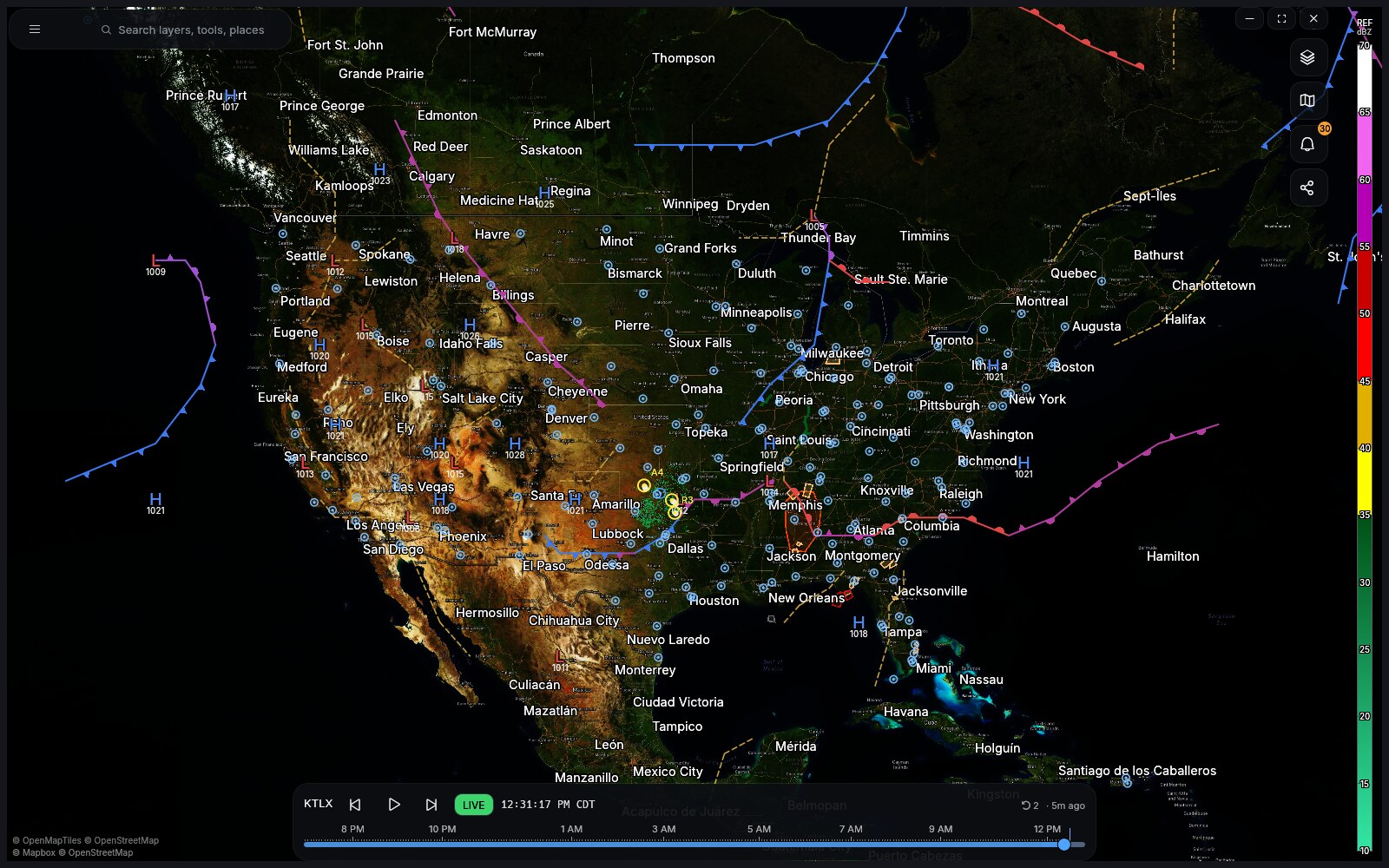
- MRMS — the national mosaic, rotation tracks, hail swaths and quantitative precipitation estimates, blended across every radar at once.
- HRRR and NAM — hourly model fields, including the severe composite parameters, read straight from the public model buckets.
- The National Weather Service API — warnings, watches, point forecasts, storm reports, surface observations and text products.
What happens on your machine
The app decodes the raw volume, corrects the velocity aliasing, builds the sweep geometry and rasterizes it on your GPU. Nothing has been resampled, smoothed or downscaled by anyone before you see it, because nobody else touched it. When you switch tilts, the data for that tilt is already in memory — it came down in the same volume.
It also means the app works in places a thin client cannot. Offline chase packs are just the volumes you already downloaded, and the archive is the same decoder pointed at an older file.
Why it is free
Because it costs nothing to run. There is no rendering server, no data licence, no API contract and no infrastructure bill to pass on to you. The desktop app talks directly to NOAA; the browser version is a static bundle. What is left is the code, which is MIT licensed and on GitHub.
What the app and this site actually contact · How it compares to the alternatives